Women in the mountains: decoding the key issues. Hear from Marion Haerty and Isabelle Liardet.
Women in the Mountains: Understanding the Issues and Highlighting Those Who Are Changing the Game
The Mountains: Long Seen as a Man’s Playground
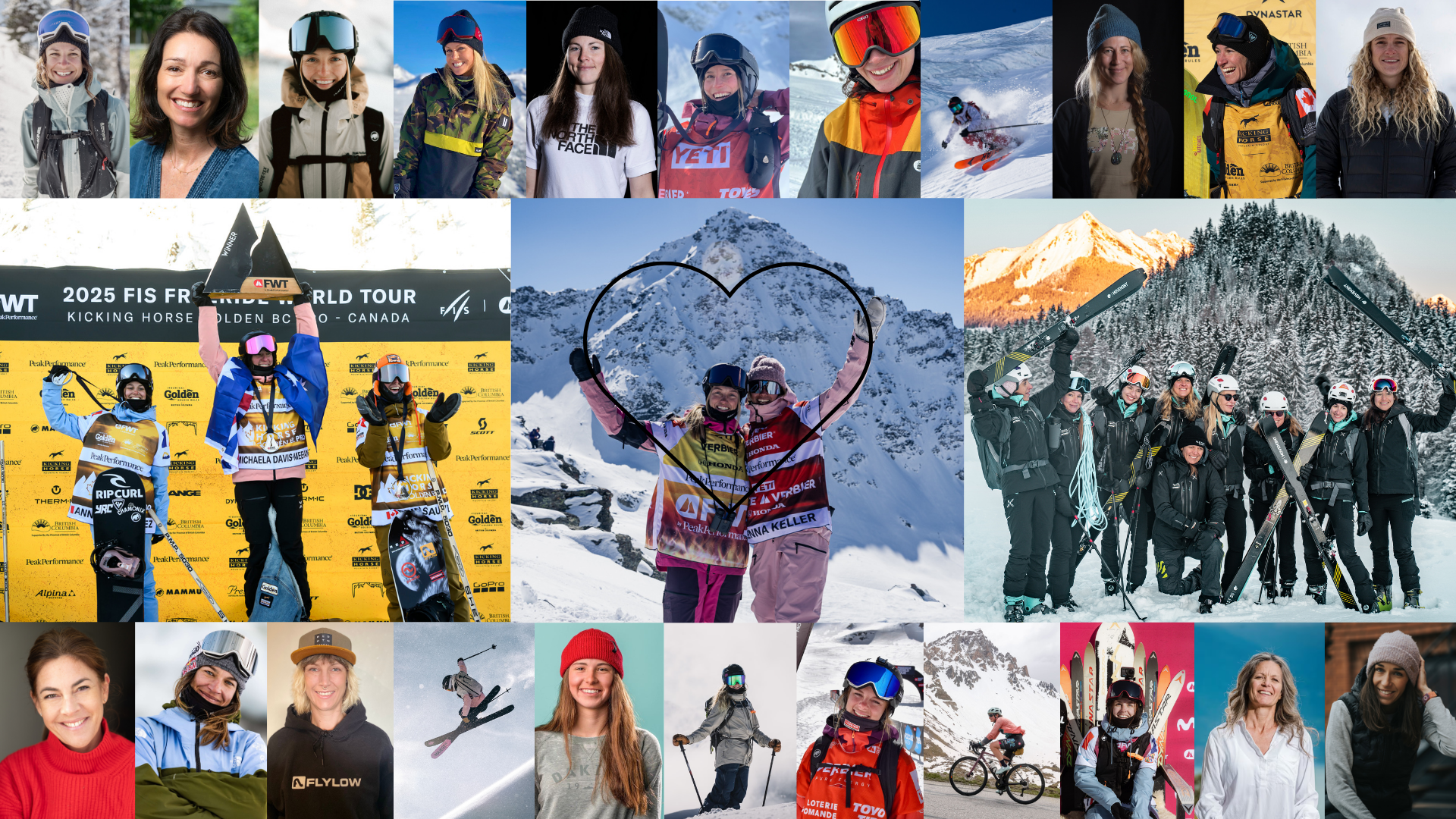
The mountains are a space of freedom for everyone. They don’t care about gender, anyone willing to take on the challenge is welcome. And yet, they’ve long been perceived and lived as a primarily male playground. Today, more and more women are claiming their place and their voice in the mountain world. Several initiatives now embody greater gender mix and inclusion in the mountains. Women’s practice in alpine environments is increasingly highlighted and that’s great news for everyone.
The feminisation of mountain sports is real. According to a 2025 study by skimetrics.fr, women represent 47% of skiers in French ski resorts. Skiing is clearly a powerful entry point for women into the mountain world. However, a gap remains. An IPSOS study from 2022 shows that 17% of men say they ski regularly, compared to 11% of women. In an article published in 2019, Véronique Reynier (researcher at the “Sport and Social Environment” lab) pointed out that women made up only one quarter of snowboarders.
The Mountains: A Demanding Physical Environment
There is still a long way to go to reach true gender parity in the mountains. We asked two strong female figures in the mountain world for their views. Their assessment is clear‑eyed, like that of Isabelle Liardet, member of the management of the Sport & Health Service at the University of Lausanne (UNIL) and the EPFL. “In the Swiss Alpine Club, some sections have reached parity. Women have come later to high mountain sports and freeride – we’ve got decades to catch up. We basically have a hundred years of delay on men, and that takes time to close. There are also far fewer women among mountain guides. I recognise that male/female physiology is not the same, and these jobs require solid physical abilities. I think there are women who have the technique and all the skills, but who doubt themselves for physical reasons,” says Isabelle, who contributed as an expert to the design of the WEMountain program.
A Still-Elitist Environment
Four‑time Freeride World Tour champion Marion Haerty has her own perspective on women’s inclusion in the mountains. “When I arrived in Chamonix 10 years ago, there were far fewer visible women in the mountains than today. Now, you see a lot more of them, which is great. But the mountain world remains very elitist. I created an introduction event (Level Up) to help women ride in the mountains, on splitboards and in freeride. It’s tough, as a woman, to be included in this environment. We may not have the same level or progression as guys. I’m not angry about that – the mountains are beautiful, but also hostile.” She also reminds us that jobs such as female IFMGA guide, instructor or ski teacher are physically demanding, very close to high‑level sport. “That said, there are more and more initiatives to support women in the mountains,” Marion adds.
Reasons to Believe in a More Mixed Mountain Culture
The Role of the “Femmes en Montagne” Festival
Created in 2019 by the association On n’est pas que des collants, the Femmes en Montagne film festival has found a strong place in the mountain community. Its goal is clear: promote gender equality in the mountains. The festival showcases films and portraits of women whose common thread is the mountains. Powerful stories and a way to highlight female representation in mountain sports – something that speaks to riders, skiers, guides, instructors, ski teachers and female experts alike.
The Power of Female Role Models
For a young female athlete, being able to identify with a champion or an experienced rider can make all the difference. That’s exactly what Marion Haerty offers with her “Level Up” event, where she generously shares her knowledge. This matters even more when you consider that one in two teenage girls drops out of sport before the age of 15 (MGEN / Kantar study, Jan 2026).
WEMountain provides training to the riders who attend Level Up – a strong sign of mutual trust between Marion and WEMountain.
Having lived in Chamonix for the past 10 years, Marion herself benefited from role models, and is now proud to pass the torch: “Role models are super important. Seeing women who’ve made it, it really helps. I often ride with a new generation of female riders – they’re insanely impressive! When we were younger, we put up many more mental barriers, often coming from society. Today, girls put themselves on the same level as guys, they want to do the same lines and have more self‑confidence in certain areas,” she says.
Isabelle Liardet shares the same view:
“A woman who is encouraged by role models or key people will be more driven and feel more legitimate. Today, the path is marked: we have a lot of female models in all mountain disciplines – ski, snowboard, freeride, freestyle, climbing… We need to take inspiration from them and listen to what they have to say, hear their stories.”
“I think these programs are really important to give women the tools they need to ride for a long time, in terms of risk prevention. They’ll then feel able to read conditions, decide whether they should go or not, and base their decisions on clear, science‑based criteria,” explains Isabelle Liardet.
WEMountain: A Real Player in Women’s Inclusion in the Mountains
Women Are Highly Receptive to Safety Topics
As a major mountain safety actor, WEMountain offers both online courses and on‑snow courses focused on avalanche prevention. Around 35% of our more than 5,000 members (from 52 countries) are women – a strong sign that the WEMountain approach resonates with female riders.
WEMountain is also supported by a powerful group of female Safety Angels (ambassadors), including:
Zuzanna Witych (Freeride World Champion 2026);
Marion Haerty (4x FWT Champion);
Mia Jones (FWT Champion 2026);
Anna Martinez (2nd overall FWT 2026);
Justine Dufour‑Lapointe (2x FWT Champion);
Astrid Cheylus (2nd overall FWT 2024, 3rd FWT 2025);
A Partnership with Reaching Summits for the Patrouille des Glaciers
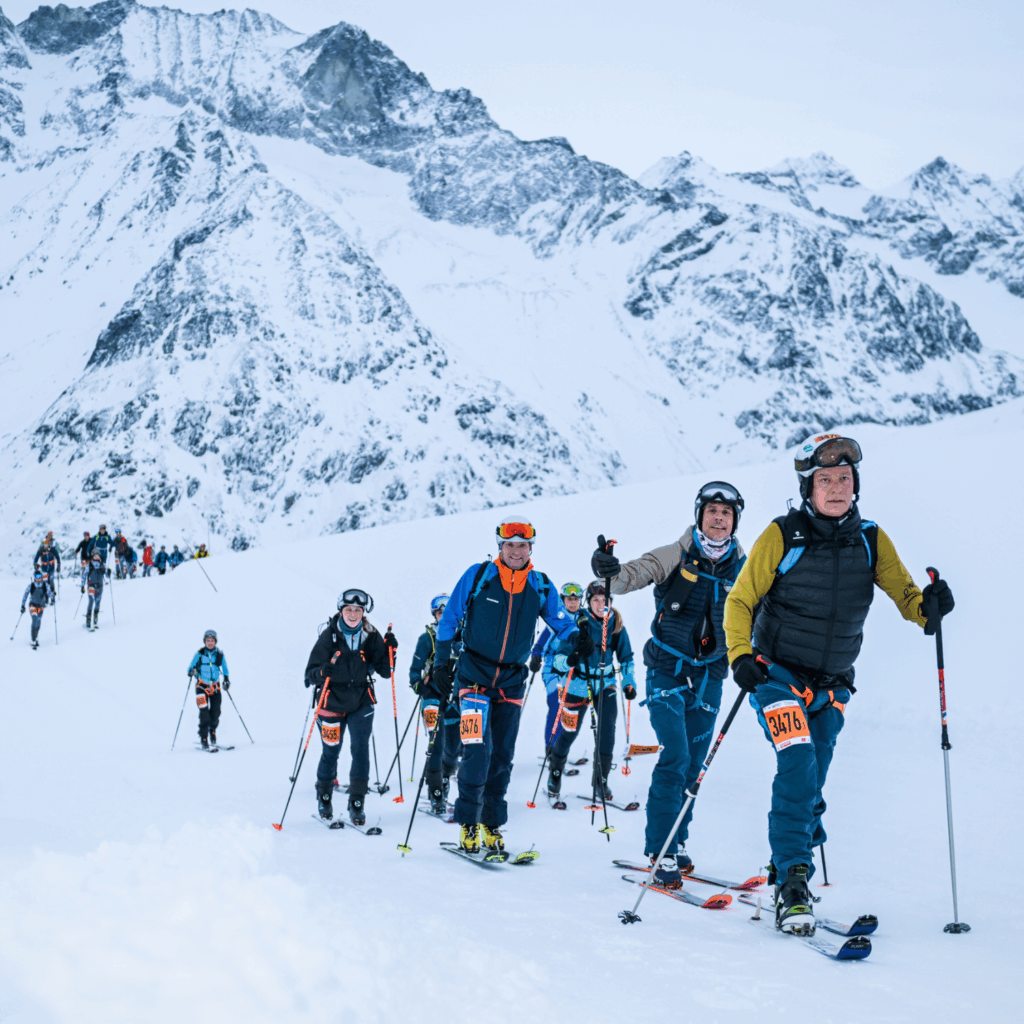
WEMountain has also been involved for several years in the legendary Patrouille des Glaciers. Through our partnership with Reaching Summits, we support 100% female teams on this iconic ski mountaineering race. Once again, it’s a way to contribute to women’s inclusion in the mountains and to break persistent gender stereotypes in high‑alpine environments.
CONCLUSION – Gender Mix in the Mountains: A Healthy Ambition
Today, more and more women want to discover and progress in the mountains. Surrounded by supportive people, they can gradually grow their knowledge base and self‑confidence. Guided by a clear, structured approach to mountain safety, they will slowly but surely build the skills they need. Will there be moments of frustration along the way? Of course. Marion Haerty has a message for them: “Be patient with your progression – it doesn’t happen overnight. And don’t be too hard on yourself. Celebrate every little win!”. She also encourages everyone in the mountain community to welcome and support women who decide to go for it, push boundaries and shake up outdated stereotypes. Message received!