Whichspecific terrains favor or reduce avalanche release? Explore the mountain and secureyour outings by mastering terrain-relatedrisks.
Specific Terrains: Discover the Mountain’s Secrets
A misread of the terrain in the mountains can have dramatic consequences. Avalanches do not start anywhere at random, some terrain types are more favorable to release, others less so. Understanding these specific terrains is a major step toward safer winter mountain travel.
Reading the terrain: the foundation of mountain safety
Terrain, the first risk indicator
When travelling in the winter mountains, the ability to recognise and assess the surrounding terrain is essential. Terrain shapes give clues; relief features send signals. Decoding them is crucial. The mountain itself provides important information about avalanche danger, always analyse the terrain carefully.
Anticipation in the mountains: look beyond your skis
Before any winter mountain outing (ski touring, freeride, etc.), mentally project yourself into the terrain you will encounter. Learn to identify terrain forms that indicate avalanche risk. Take the time to analyse avalanche hazards, and remember the risk (and the terrain) can change over just a few dozen metres. Mastering terrain reading improves decision-making and increases safety in winter mountain environments.
Which specific terrains increase or decrease avalanche risk and potential consequences? The answer below.
Several types of triggering terrain are commonly identified:
Summit slopes, located just below peaks, ridges or crests. These slopes, often on the leeward side, accumulate wind‑transported snow. Wind slabs can form and may release under even a small additional load. Summit slopes are classic terrain for avalanche initiation, without careful reading the situation can become critical quickly.
Leeward slopes, sheltered from the prevailing wind. Wind transport also affects these slopes; fragile layers may be present and can fail unexpectedly. Identifying and avoiding such slopes is essential.
Rolls, locations where slope angle changes abruptly. These are often attractive to ski, with steeper sections, but the snowpack is more fragile and layers can fail more readily, producing frequent slab releases.
Accurate terrain reading is therefore vital to managing avalanche risk.
Aggravating terrains
There are also terrains that aggravate the consequences of an avalanche:
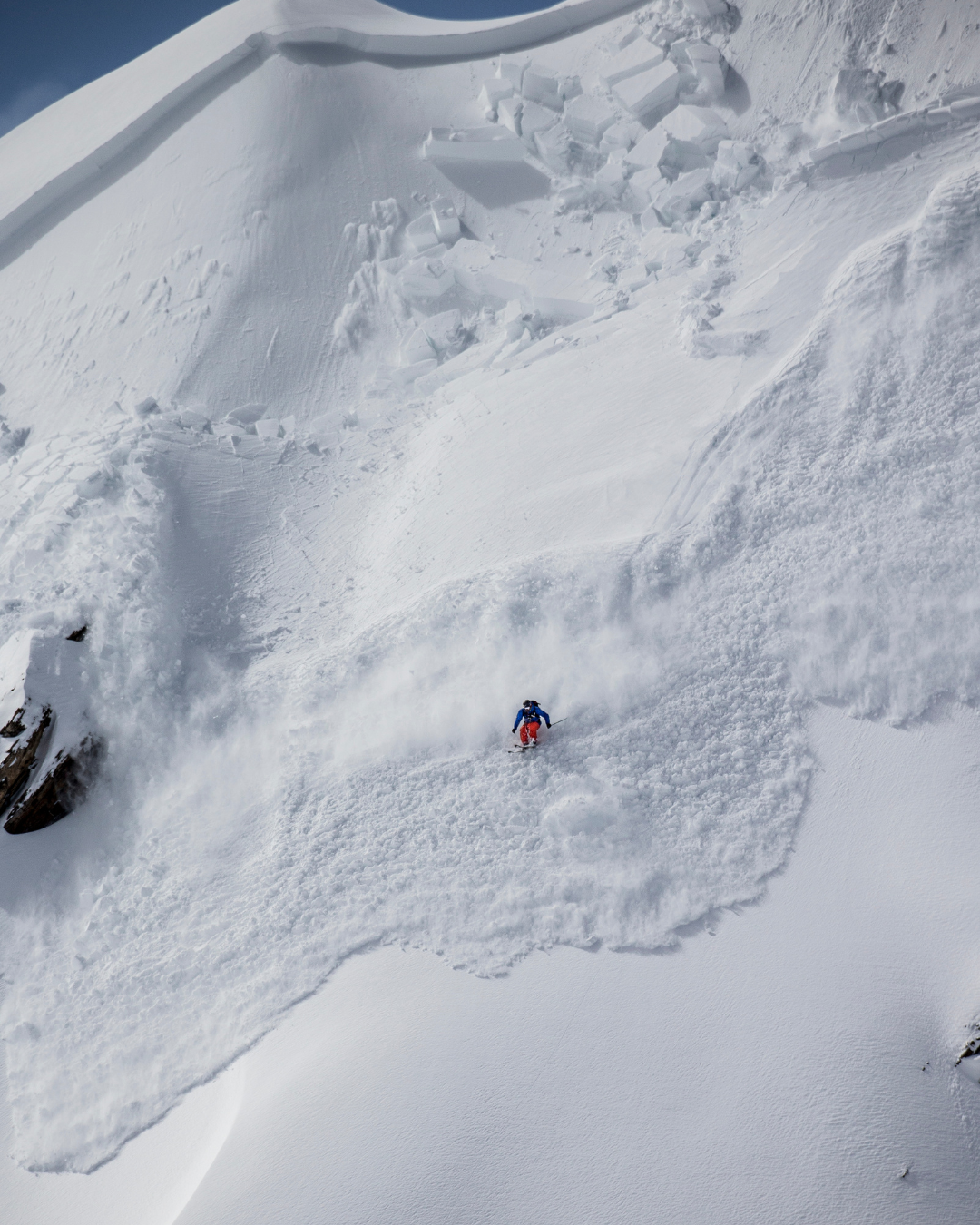
Open slopes Open slopes Dominique Perret, co‑founder of WEMountain and a leading voice in mountain safety, recently wrote an article on an article on Outside.fr about these “versants of 1,500 to 2,000 metres of vertical.” He notes: “They are breathtaking… and extremely dangerous. In this terrain an avalanche has all the space to grow, accelerate and reach immense size. Potential burial is considerable, both in depth and distance. These big slopes demand the highest level of caution. They are beautiful to ski, but terrifying if they release.”
Forests Forested areas Seemingly harmless, forests can be deceptive. In an avalanche, trees, snowholes and stumps are major trauma hazards. Branches and roots also increase the risk of falls and serious injury.
Triggering + aggravating terrains
Some configurations combine a high probability of release with severe consequences: Steep Convex slopes: slope angle increases progressively over a long distance, often hiding the lower slope from view, a blind ski can expose you to unseen hazards. Unsupported slopes and concavities: these features both favour release and amplify avalanche size and run.
A supportedslopeissteepbut ends on aflat or terrace. Whileavalanche risk can stillexistif the snowpackisunstable, the terrain configuration offers escape options andlimitspotentialconsequences. Beware, however, of overconfidence.
Islands of safety
As Dominique Perret explains: “A rock, a convex bulge, a small ridge or a flat area in the middle of a larger slope, these are temporary shelters where you can stop, catch your breath and calmly reassess the situation.” Islands of safety reduce exposure but do not eliminate risk. Knowing where to stop is part of good terrain reading.
Windward slopes
Not always enjoyable to ski, windward slopes often carry less fresh load. Directly exposed to the prevailing wind, they are less prone to wind‑slab formation and can offer more controlled skiing conditions.
Reduce exposure by mastering specific terrains
Managing avalanche risk starts before committing to a slope. Terrain reading is a skill that must be learned, it allows you to avoid being overwhelmed by the mountain and to turn back when necessary. WEMountain can help you acquire the knowledge and skills needed to secure your mountain outings. Our expert‑designed program combines e‑learning and field courses to deliver a comprehensive avalanche prevention and mountain safety education. Learn to anticipate, decide, and reduce your exposure to risk.
If this article on specific terrains caught your interest, consider booking one of our trainings. Better preparation means safer, more enjoyable outings. We wish you an excellent winter, full of great tracks and shared moments.
- Why is reading the terrain essential for mountain safety?
Terrain is the first visible risk indicator. Analysing it before and during an outing allows anticipation and better risk management. Knowing your playground thoroughly supports safe decision‑making. Study, feel and understand the slope, it’s indispensable.
- At what slope angle can an avalanche be triggered?
Avalanches commonly release on slopes between about 30° and 45°. These angles favour the accumulation of unstable layers. Below ~25° the initiation risk is low, but hazards above you can still trigger slides. Objectively assessing slope angle in degrees is useful to place a slope relative to known avalanche thresholds.
- How do you recognise avalanche-prone terrain in the mountains
Avalanche‑prone terrain is chiefly identified by relief shape. Steep slopes, slope breaks, summit and leeward slopes are classic release areas. To refine the analysis, observe aspects such as orientation to wind. Distinguishing avalanche terrain means reading the cues the mountain provides.